
Benefits of Divorce Mediation Processes: Why Choose It?
- Suzanne Winlove-Smith
- Jun 15
- 3 min read

Divorce can be a challenging and emotional journey. When relationships reach a point where separation feels like the best path forward, finding a way to navigate this transition with respect and clarity becomes essential. Divorce mediation processes offer a thoughtful and collaborative approach to resolving family matters. This method supports you in making decisions that honor your needs and those of your children, while reducing conflict and stress.
Understanding the benefits of divorce mediation can help you feel more confident about choosing this path. It’s a way to work through difficult conversations with guidance, rather than confrontation. Let’s explore how divorce mediation processes can empower you to move forward with dignity and peace.
What Are Divorce Mediation Processes?
Divorce mediation processes involve a neutral third party, called a mediator, who helps both partners communicate and negotiate the terms of their separation. Unlike traditional court battles, mediation focuses on cooperation and mutual understanding. The mediator does not make decisions for you but facilitates discussions to help you reach agreements on important issues such as:
Child custody and visitation schedules
Division of property and assets
Financial support, Spousal & Child Support
Parenting plans and communication strategies
This process is designed to be flexible and tailored to your unique situation. It encourages open dialogue and problem-solving, allowing you to maintain control over the outcomes rather than leaving decisions to chance or to a judge who knows nothing about you or your family.
How Divorce Mediation Processes Support You
One of the key strengths of divorce mediation processes is the supportive environment they create. When emotions run high, having a calm space to express concerns and listen to each other can make a significant difference. Here’s how mediation supports you:
Encourages respectful communication: The mediator helps keep conversations constructive, reducing misunderstandings and hostility.
Focuses on your family’s needs: Mediation prioritizes what works best for your children and your future relationship as co-parents.
Offers privacy and confidentiality: Unlike court proceedings, mediation sessions are private, allowing you to discuss sensitive topics openly.
Saves time and energy: Mediation often resolves issues faster than litigation, helping you avoid prolonged stress.
By fostering collaboration, mediation helps you and your partner find common ground. This can lead to solutions that feel fair and sustainable, rather than imposed.
Exploring the Divorce Mediation Benefits
Choosing mediation brings several advantages that can positively impact your experience and outcomes. The divorce mediation benefits include:
Cost-effectiveness: Mediation costs are dramatically lower than court battles, making it a more accessible option.
Greater control: You have a direct say in the decisions affecting your life and family.
Reduced conflict: Mediation helps lower tension, which can protect your emotional well-being and that of your children.
Customized agreements: Solutions are tailored to your specific circumstances, rather than following rigid legal formulas.
Improved co-parenting relationships: Working together in mediation can lay the foundation for respectful communication after divorce.
These benefits contribute to a more positive transition, helping you feel empowered rather than overwhelmed.

Practical Steps in Divorce Mediation Processes
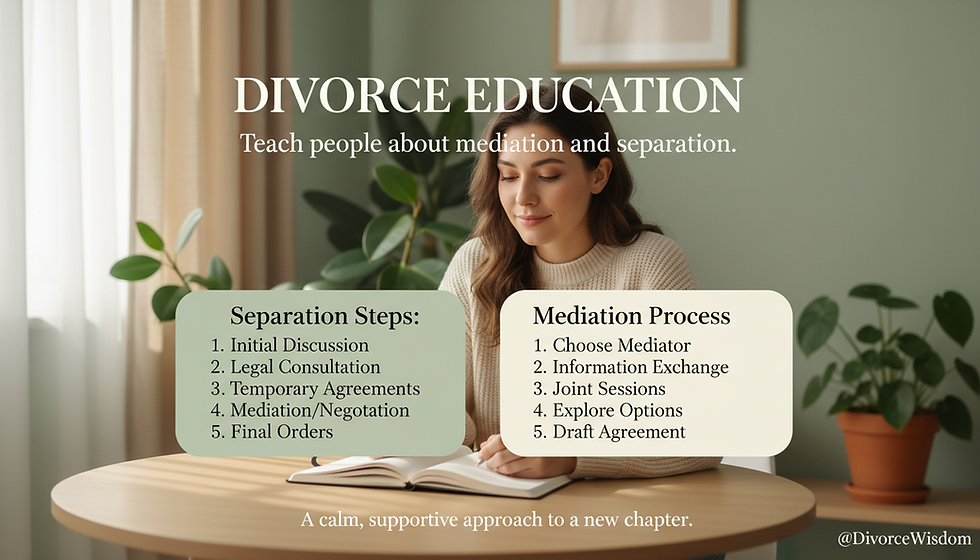
Understanding what to expect during mediation can help you prepare and feel more at ease. Here’s a general outline of the process:
Initial consultation: You meet with the mediator to discuss your situation and goals.
Setting ground rules: The mediator explains how sessions will work and establishes guidelines for respectful communication.
Identifying issues: Both partners share their concerns and priorities.
Exploring options: The mediator helps brainstorm solutions and negotiate terms.
Reaching agreements: Once consensus is found, agreements are written down and reviewed.
Finalizing the process: Agreements can be submitted to the court for approval, making them legally binding.
Throughout these steps, the mediator remains neutral and supportive, guiding you toward decisions that reflect your values and needs.
Empowering Your Path Forward
Divorce mediation processes offer a way to approach separation with clarity and respect. By choosing mediation, you are investing in a process that values cooperation and understanding. This approach can help you protect your emotional health, support your children, and create a foundation for a positive future.
If you are considering separation or facing relationship challenges, exploring mediation might provide the clarity and support you need. It’s a step toward resolving family matters with dignity and care, empowering you to move forward with confidence.
Taking this path is about finding solutions that work for your unique family. It’s about honoring your story and creating a new chapter with intention and peace.



Comments